How to create a natural interior with rattan
Natural decorating has moved well past a trend. People are choosing materials that age rather than expire, and rattan sits right at the centre of that shift: warm, light, fast-growing, and quietly graphic. The difficulty is not finding rattan pieces — it is arranging them so a room feels calm and considered rather than like a holiday rental.
Why rattan works so well indoors
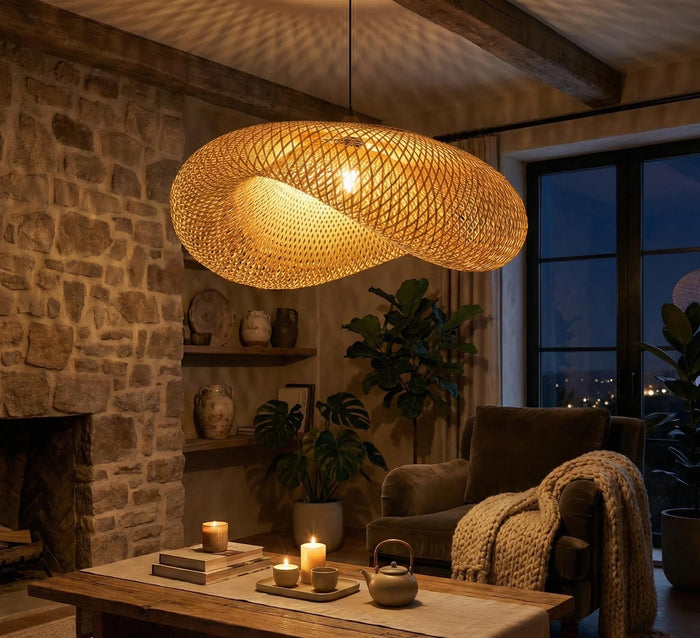
Rattan brings three things at once that most materials only offer one of. It has visible texture, so it breaks up flat walls and smooth furniture. It is pale and warm, so it lifts a room instead of weighing it down. And when it is woven and lit from within, it does something no other material does: it turns light into pattern.
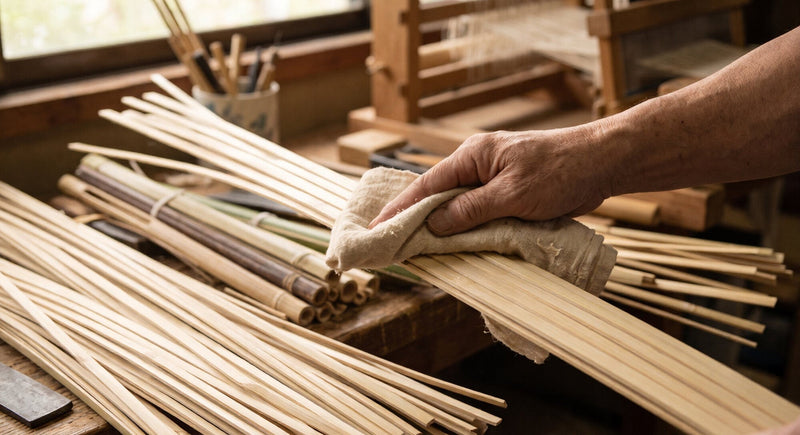
It is also a genuinely renewable material. Rattan is a climbing palm that regrows within a few years of harvest, with no replanting needed, and it grows inside standing forest rather than in place of it. If you want a home that looks natural and actually is, rattan is one of the few materials that delivers both.
Building the room around it
Start with the light, not the furniture
Most people add natural decor last, as accessories. Reverse it. A woven pendant is the single largest gesture you can make in a room, and it sets the palette for everything below it. Choose the light first and the rest of the room falls into place around its tone.
Keep the palette narrow
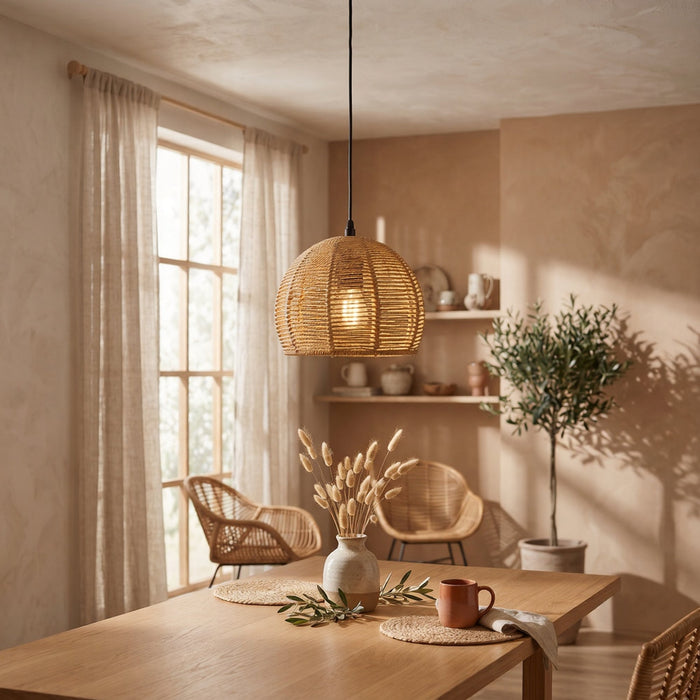
Rattan reads best against soft, chalky neutrals — warm white, oatmeal, clay, sage. Two or three tones, no more. Every extra colour competes with the texture of the weave and flattens it.
Contrast the texture, not the colour
A woven shade sings when it sits near something smooth: a plaster wall, a linen curtain, a matte ceramic. Surrounding it with more rough natural texture — jute, seagrass, rough wood, all at once — is what produces the beach-house effect people are trying to avoid.
Room by room
The dining room
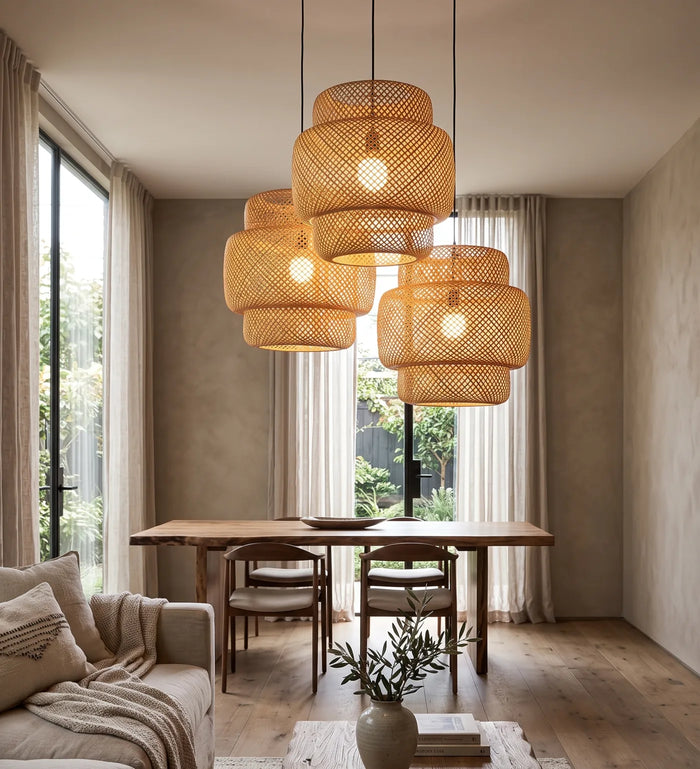
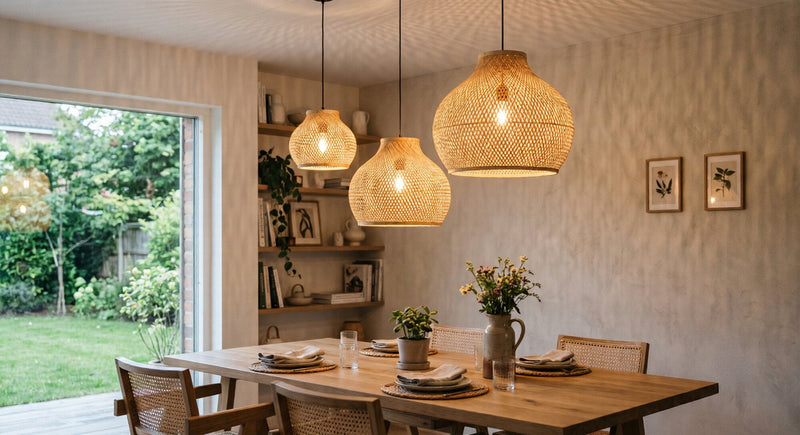
This is where a woven pendant does its best work. Hung roughly 75 to 90 cm above the table, it throws a pattern of light across the surface and gives the whole room a centre. One large shade almost always beats three small ones.
The living room
Here rattan works better off-centre. A pendant over a reading corner, or a pair at different heights beside a sofa, creates pools of warmth instead of one flat overhead wash. Pair with a dimmer and the room gains a second personality after dark.
The bedroom
Woven shades diffuse light softly, which makes them unusually good for bedrooms. Hang one low on each side of the bed in place of table lamps and you free up the nightstands entirely.
The entryway
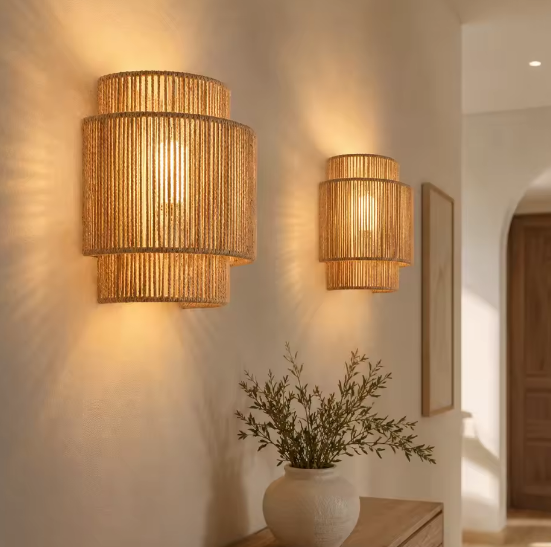
A small entrance is the one place a bold woven shape is never too much. It is the first texture a guest sees, and it signals the whole house.
Three mistakes worth avoiding
Too many natural materials at once
Natural does not mean everything. Let rattan be the hero and give it plain surfaces to sit against.
Cold light
A 4000K bulb turns warm rattan grey and kills the entire effect. Stay at 2700K, and use a dimmable LED wherever you can.
Hanging too high
A woven shade hung near the ceiling loses its shadow play. Bring it down until it feels almost too low — that is usually right.
Done properly, a natural interior is not a style so much as a decision to live with fewer, better things. Rattan makes that decision easy to see.
See our handwoven rattan lighting, made in small batches by master weavers: discover the collection.